
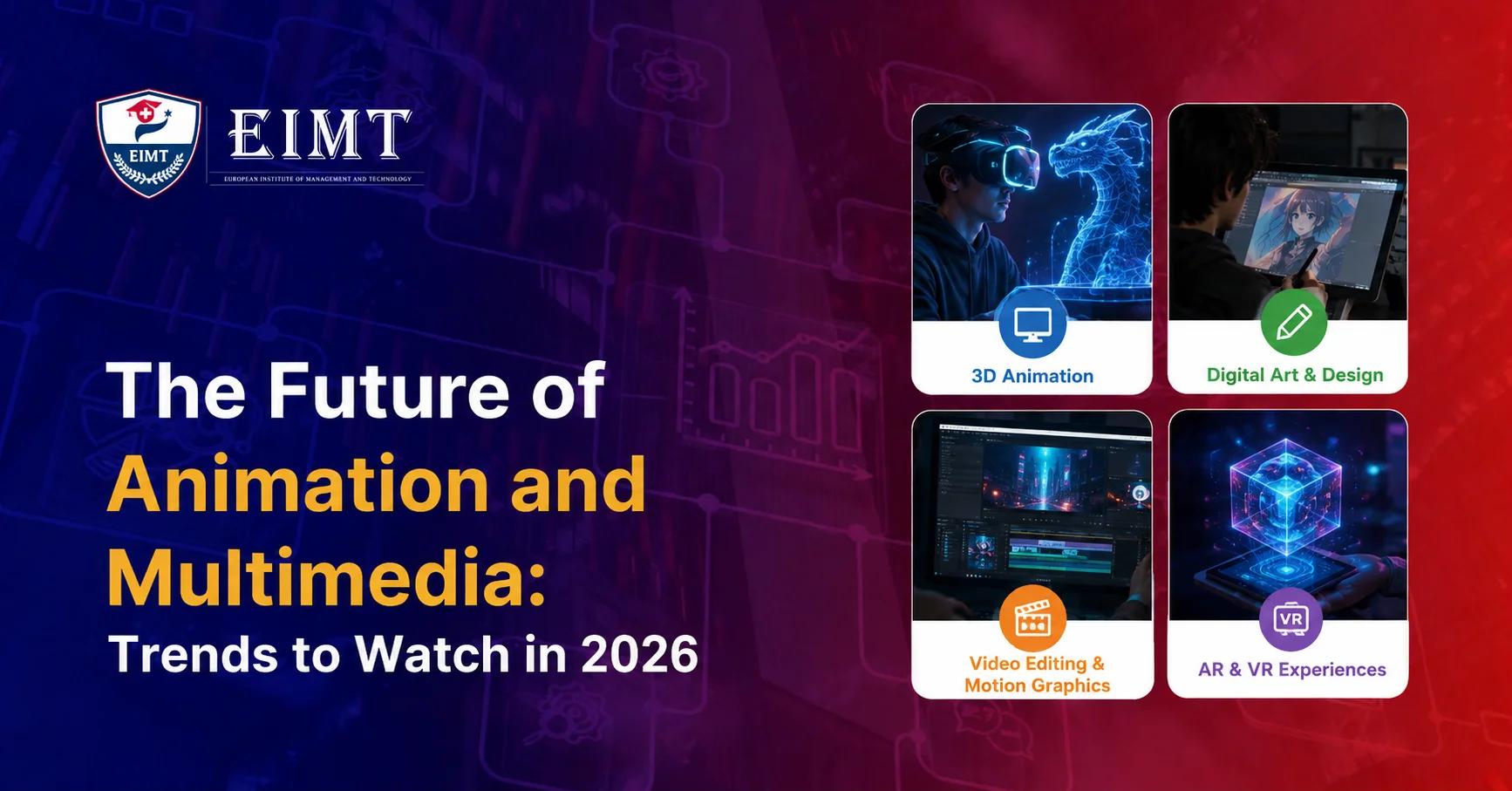
The Future of Animation and Multimedia: Trends to Watch in 2026
Home / The Future of Animation and Multimedia: Trends to Watch in 2026
Animation and Design
Animation and multimedia have grown into essential business and communication tools. Earlier, these were industries focused only on entertainment. Now companies are using animation in literally everything. For example, we can say they are using animation to explain medical procedures, train employees, visualize architectural projects, market products, and specially educating students; this has become popular and valuable enough. That's the reason companies want individuals who understand storytelling, user experience, production pipelines, interactive media, and the technologies that support modern content creation.
As stated, the use of animation and multimedia has expanded well beyond the entertainment industry. At present, organizations across healthcare, education, engineering, gaming, retail, and digital marketing rely on them to communicate information, engage audiences, and solve business challenges. These changes are creating new career paths while also raising the expectations placed on graduates entering the field. The article explores the trends influencing animation and multimedia in 2026. This is going to help professionals prepare for the next stage of the industry's growth.
Top Animation and Multimedia Trends That Will Shape Careers in 2026
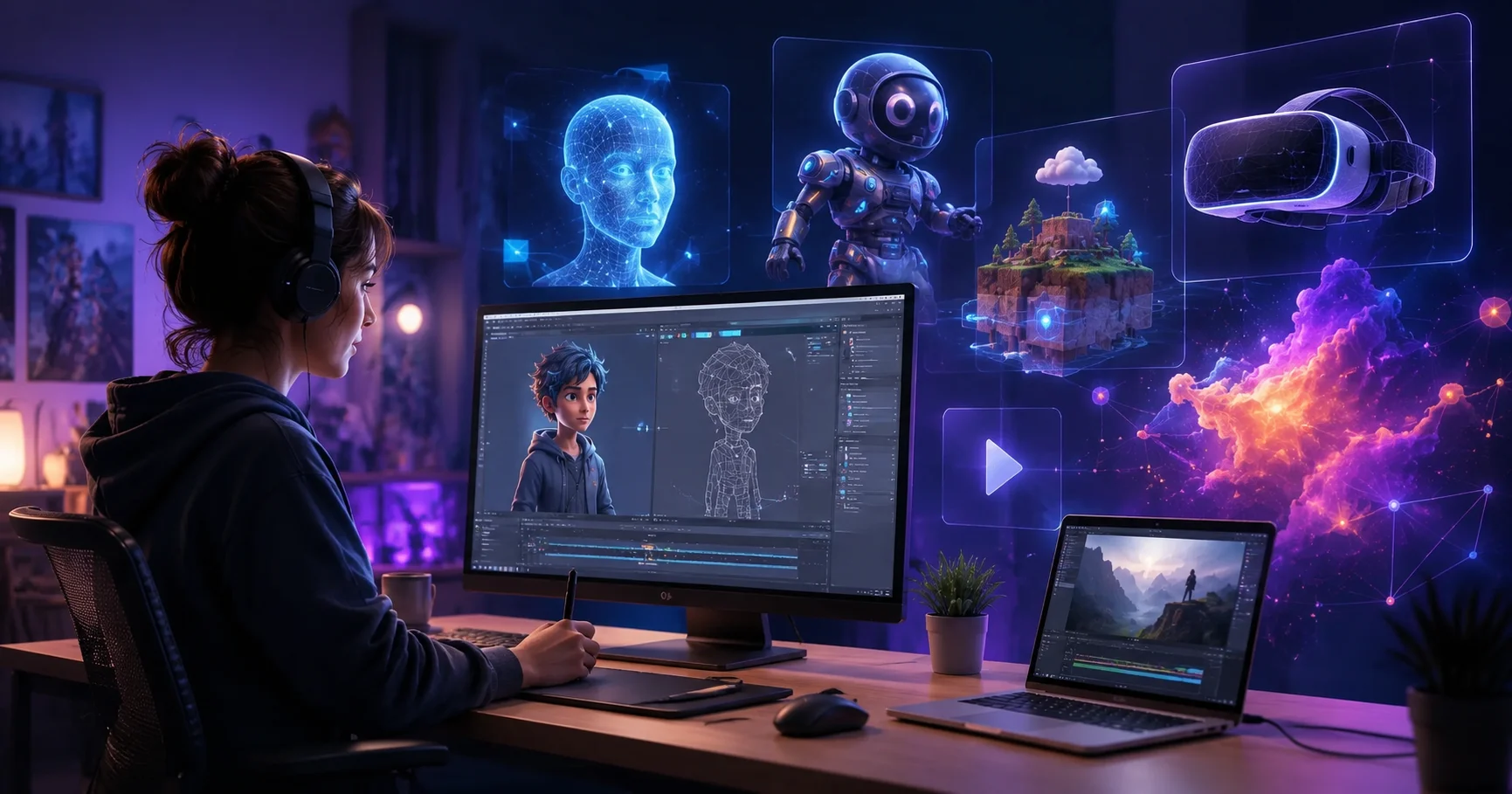
The future of animation depends on more than creative talent. The following trends show where the industry is heading and why they matter for students planning a career in animation and multimedia.
1. Real-Time Rendering Is Redefining Modern Animation Production
For years, producing a high-quality animated scene meant waiting minutes or even hours for every render before reviewing the final result. Real-time rendering has changed the workflow and made our work easier. Now, one doesn't have to wait for completed frames; artists can see lighting, texture, shadows, and camera movements almost instantly while making creative decisions.
Game engines such as Unreal Engine and Unity have become powerful creative tools for animation studios because they now support animated films, commercials, architectural visualization, virtual events, automotive design, and product demonstrations. Even directors and clients now don't have to wait until the end of the production; they can review scenes earlier while identifying issues and getting it done right.
As more industries adopt these workflows, demand is growing for Real-Time 3D Artists, Technical Animators, Environment Artists, Virtual Production Artists, and Visualization Artists, making game engines valuable skills even for students who do not plan to work in game development.
2. Virtual Production Is Changing How Visual Content Is Created
Traditional productions rely heavily on green screens, where backgrounds and visual effects are added after filming. In virtual production, 3D environments are created before filming and displayed on LED stages, allowing live-action footage and digital content to work together. Organizations are adopting virtual production for films, advertising campaigns, training videos, and live broadcasts; employers are looking for professionals who understand animation, lighting, camera workflows, and virtual environments. Animation skills now extend beyond content creation to supporting modern film and media production. This is creating opportunities for Virtual Production Artists, Previsualization (Previs) Artists, Lighting Artists, Environment Artists, and LED Volume Specialists.
3. Intelligent Animation Tools Are Reducing Repetitive Production Tasks
Studios are using intelligent production tools to simplify technical workflows and keep projects moving on schedule. For instance, features like motion cleanup, frame interpolation, automatic rigging, and asset management reduce repetitive work while helping teams maintain consistency across large productions.
But the thing is that the quality of an animation still depends on the creative decisions behind every scene. Story development, character design, visual language, and emotional impact remain responsibilities that require human imagination and artistic direction. Professionals who can combine creative thinking with modern production tools are increasingly sought after for roles such as Character Animator, Character Rigger, Motion Capture Artist, Technical Animator, and Animation Pipeline Artist.
4. Motion Design Is Becoming Essential for Websites, Apps, and Digital Products
Modern websites and mobile applications are going crazy for user attention, but having a good design is the bare minimum we can do. Motion design helps explain actions, confirms user inputs, guides navigation, and creates smoother digital experiences through purposeful animation. Due to this, the demand for motion designers continues to grow across companies including e-commerce, fintech, healthcare, and SaaS. This has created career opportunities far beyond film and entertainment, particularly in product design, user experience (UX), and technology companies.
5. Virtual Humans and Digital Avatars Are Expanding Beyond Entertainment
Virtual humans are realistic digital characters that can speak, respond, and interact with people. Digital avatars are evolving from fictional characters into interactive assistants that help people learn, shop, and access customer services. Building these virtual humans requires a high level of expertise in facial animation, motion capture, voice synchronization, and character behavior, combining artistic creativity with technical production skills. Professionals with these skills can pursue careers as Digital Avatar designers, Motion Capture Specialists, Character Riggers, Facial Performance Artists, and Virtual Production Artists.
6. Extended Reality Is Creating New Opportunities for Immersive Content
Extended Reality (XR), which includes Augmented Reality (AR), Virtual Reality (VR), and Mixed Reality (MR), is changing how people learn, work, and interact with digital content. These technologies combine digital content with physical environments, allowing users to interact with information rather than simply watch it.
Today, XR is used to train surgeons, improve workplace safety, create interactive classrooms, enhance museum exhibits, visualize retail products, support tourism, and simulate manufacturing processes. Every immersive experience relies on animated environments, realistic objects, and responsive interactions to engage users. Students with XR skills can pursue careers as Immersive Media Specialists, VR Experience Designers, AR Developers, 3D Visualization Artists, and Simulation Designers.
7. Digital Twins Are Creating Demand Beyond the Entertainment Industry
Many of the fastest-growing animation opportunities now come from industries that never produced films or games. Digital twins are virtual replicas of physical objects, buildings, factories, or even entire cities that help organizations visualize, monitor, and test real operations. Creating these experiences requires realistic modeling, animation, lighting, and interactive visualization. Skills in visualization and simulation can prepare you for careers as Digital Twin Artists, 3D Visualization Specialists, Simulation Designers, and Technical Artists.
8. Procedural Content Creation Is Transforming Large-Scale Projects
Modern productions can include thousands of buildings, landscapes, vehicles, and characters. Creating each element manually doesn't feel practical today. Procedural content creation uses rule-based systems to automatically generate cities, forests, landscapes, crowds, and other complex assets, reducing manual work while maintaining consistency. Knowledge of procedural tools such as Houdini can prepare students for roles in Visual Effects, Environment Design, Technical Art, and Large-Scale Content Production.
9. Interactive Storytelling Is Changing Audience Expectations
The growth of social media has changed audience expectations. Brands and influencers encourage users to interact through AR filters, animated product experiences, polls, quizzes, and immersive visual content that increases engagement.
As businesses compete for attention across platforms like Instagram, TikTok, and Snapchat, animation professionals who understand interactive storytelling are becoming valuable members of marketing and creative teams. This trend is creating opportunities for Brand Experience Designers, Motion Graphics Designers, AR Content Creators, Social Media Visual Designers, and Interactive Marketing Specialists.
10. Animation Is Becoming a Business Communication Tool Across Industries
Businesses are using animation at every stage, from explaining products, simplifying technical information, training employees, to communicating with customers. Professionals who combine animation with communication skills can pursue careers as Visual Communication Designers, Multimedia Specialists, Training Content Designers, and Product Animation Artists.
Conclusion
As these trends continue to shape the industry, students need more than traditional animation skills. An Animation and Multimedia Master's Program can help build expertise in 2D and 3D animation, multimedia production, interactive media, and industry-standard tools for today's creative careers.
The EIMT Editorial Team is made up of academic editors, faculty contributors, curriculum specialists, instructional designers, education researchers, programme managers, quality assurance professionals, content strategists, and subject matter experts...
Frequently Asked Questions
What is the future of animation and multimedia?
Is animation and multimedia a good career in 2026?
Which animation skills are most in demand in 2026?
Will artificial intelligence replace animation jobs?
Which industries hire animation and multimedia professionals?
Do I need coding skills to build a career in animation?
What software should animation students learn in 2026?
What are the highest-paying careers in animation and multimedia?
How can students prepare for careers in animation and multimedia?
What should students look for in an Animation and Multimedia Master's Program?
Latest Updates & Articles
Stay Connected !! To check out what is happening at EIMT read our latest blogs and articles.
Sep 10, 2026
Sep 10, 2026