


logo

All Programs

About EIMT

Research

Student Zone


How to Apply

Apply Now

Request Info

Online Payment

Bank Transfer

Program

Advanced Certification in AI Product Management

Home  /    /   Advanced Certification in AI Product Management

Accreditations

Accredited by major accrediting bodies.

Alumni Network

A strong network of 1000+ alumni worldwide.

Scholarships

Upto 30% of the total tuition fees available

International Students

From 20+ Countries

Program Highlights

blue-line
  • star60 hours of flexible online learning
  • starSpread across 20 modules, with no coding required
  • starLearn to write AI-ready PRDs and roadmaps
  • starCover both predictive ML and Generative AI products
  • starBuild and deploy a real AI prototype with no-code tools
  • starMaster evaluation, safeguards and responsible AI practices
  • starWork through 75+ hands-on labs and real case studies
  • starConclude with a capstone project by developing a product prototype

Get FREE 1:1 Counselling

blue-line
Phone

=

Overview – Advanced Certification in AI Product Management

The Advanced Certification in AI Product Management, developed by EIMT, is for product professionals ready to take real responsibility for AI products.. It gives you a practical view of how AI systems behave, from tokens and context windows to model trade-offs and predictive ML. Generative AI is covered alongside classification and forecasting, reflecting the wider range of systems AI product teams work with.

The learning quickly moves into product work. You explore how to frame AI problems, assess data readiness and use prompt engineering as part of the product specification. You then put those ideas into practice through rapid prototyping, RAG applications and AI agents capable of handling multi-step tasks.

Evaluation, responsible AI, governance and product economics are also included in the program. It culminates with a two-part capstone project, where you scope, build, evaluate and harden one complete AI product from idea to a shareable, working prototype. This can prepare you for roles such as AI Product Manager, AI Product Owner and GenAI Product Lead across industries adopting AI-powered products.

Course Intro Video

Watch this short introduction to the Advanced Certification in AI Product Management program.

Advanced Certification in AI Product Management intro video thumbnail

Program Goals & Objectives

Advanced Certification in AI Product Management

Online Advanced Certification in AI Product Management helps product professionals transition from AI-curious to AI-capable, covering strategy, prototyping, evaluation and governance across a comprehensive curriculum. The program blends predictive ML and Generative AI product thinking, no-code prototyping, and a live capstone build, so you finish with a real, demoable AI product. This is a flexible program that is specifically for people already working full-time in or around product roles.

Advanced Certification in AI Product Management

  • Eligibility : A working familiarity with product development workflows is expected. No coding or technical background is required — a short primer brings everyone to a common starting point.
  • Min. Duration : 60 hours of online training across 20 modules and a capstone project.
  • Enrolment : Being online, registration remains open throughout the year, with new batches launched regularly.

Why Choose the Advanced Certification in AI Product Management at EIMT?

Faculty With Extensive Industry Experience

Learn from faculty with hands-on experience taking AI products from early concepts to live, evaluated solutions. Their valuable feedback on your work reflects the practical judgement expected in real AI product roles.

Every Module Leaves Something Behind

Each module ends with a useful output, such as a teardown, scorecard, prototype or evaluation report. Your progress shows up in tangible product work apart from regular assessments.

No Previous Coding Experience Required

The program suits non-technical product professionals, using no-code and low-code tools throughout. You still gain enough technical fluency to work confidently with engineering and data science teams.

One Product, Many Decisions

Your capstone takes shape across the program, moving from opportunity assessment to prototyping, evaluation and production readiness. Upon completion of capstone, you have a complete product story supported by clear decisions.

Accredited Institution With a Reputation

Complete the program successfully and receive an AI Product Management Certificate from EIMT, which is an accredited institution with a global reputation of delivering online programs.

Online Sessions With Faculty Support

Online sessions and recorded lectures make it easier to fit learning around a full-time profession. You can raise your doubts, test your thinking and get faculty input while working through the program.
Our Experts

Faculty Members

Meet our distinguished faculty members, industry experts, and academic leaders dedicated to delivering world-class education and guiding students toward professional excellence.

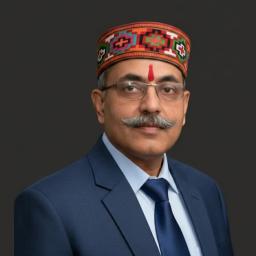
Prof. Shailendra Naresh Kulkarni

Prof. Shailendra Naresh Kulkarni

Professor & Group Rector

AcademicsAdministrationTechnology and Business
Prof. S.N. Kulkarni has many firsts to his name in the field of academics. He is the Youngest VICE-CHANCELLOR of a University in India. He also happens to be the Youngest DIRECTOR of a Technical / Engineering Institute approved by the Government of India. He has varied experience in research & academia for over a decade and a half. He has set examples in teaching as well as research practices in India & abroad. He has been instrumental in conceptualizing, initializing & establishing a number of academic institutes.

He has been the Director of many institutions imparting formal training in Engineering, Energy, Medical, Dental, Pharmacy, Mass Communication, Biotechnology & Management faculties. He has been the Chairman /’ Member of various Accreditation / Affiliation expert teams on behalf of the AICTE, Ministry of Human resource Development, Govt. of India, various state Governments and various Universities for various Approvals.
Perhaps one of his biggest achievements has been attracting and sustaining a meaningful number of transnational admissions from 31 countries in his various Universities. Prof. S.N. Kulkarni was awarded ‘Pride of Asia Award”by the Asian Business and Social Forum, Singapore in 2019. The process was spearheaded by the PwC. In the same year, he was also recognised as the Best Vice Chancellor for International Students” by the prestigious Brand Essence, India. Prof. Kulkarni was awarded Commemorative Medal of honour, Hallmark 2000 by the American Biographical Institute, Inc. USA in 1999 for Exceptional Humanitarian & Professional accomplishments. He has also been appointed to the Research Board of Advisors of this prestigious organisation since 2000. He has been the acting President of Energy Forum at Indian Institute of Technology Delhi. He has worked as an Invigilator & Examiner for the Cambridge International College, UK. An active member of the IEEE inc. USA & the IET UK, he has been championing the cause of Technology & education for more than a decade. He has also served as Vice President (India) by the prestigious International Accreditation Organization, Houston, Texas, USA. Prof. Kulkarni has been a sought-after speaker in both the Corporate and Educational world. He is a known Life-Coach, Motivator & a Life Transformer. He has a galaxy of examples of 360 degree transformed corporates, individuals & lives. Prof. Kulkarni has been a sought after speaker in both the Corporate and Educational world. He is a known Life-Coach, Motivator & a Life Transformer. He has a galaxy of examples of 360 degree transformed corporates, individuals & lives.

  • Has been the Vice Chancellor of Four Universities.
  • CEO of the Multinational Seer Oceana Group in Dubai, United Arab Emirates.
  • Youngest VICE-CHANCELLOR of a University in India.
  • Youngest DIRECTOR of a Technical / Engineering Institute
  • Advisor, Minister of Higher Education, Nagaland, Inda
  • Advisor, Minister of Tourism, Govt. of Uttarakhand, India
  • Been a DRDO Researcher, pioneering CADS in India
  • Been Founder Director of many institutions imparting formal training in Engineering, Energy, Medical, Dental, Pharmacy, Mass Communication, Biotechnology & Management faculties.
  • Been the Chairman /’ Member of various Accreditation / Affiliation expert teams in India and abroad
  • Vice President (India) by the prestigious International Accreditation Organization, Houston, Texas, USA.
Expertise / Achievements / Skills:
  • More than 20 years’ experience in Academics, Administration, Technology and Business.
  • Awarded ‘Best Vice Chancellor for International Students” by Brand Essence, India, for Distinguished professional accomplishments in Education.
  • Awarded ‘Pride of Asia Award” and Cited in the 3rd Edition of Asia’s Greatest Brands and Leaders 2018 by the Asian Business and Social Forum, Singapore, for Distinguished professional accomplishments in Education.
  • Awarded ‘The Swiss International Distinguished Value Leadership award 2022” by Unicaribbean Business School, Nigeria.
  • Awarded Commemorative Medal of Honour, Hallmark 2000 by the American Biographical Institute, Inc. USA in 1999. Has been the acting President of Energy Forum at Indian Institute of Technology Delhi.
  • Has worked as an Invigilator & Examiner for the Cambridge International College, UK. An active member of the IEEE inc. USA & the IET UK.
Switzerland

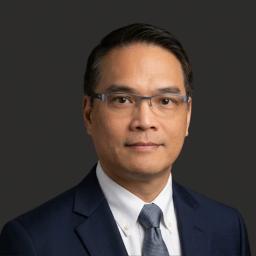
Prof. (Dr.)Mensur Zeqiri

Prof. (Dr.)Mensur Zeqiri

Rector and Dean (QA & Administration)

International Business
Prof. (Dr.) Mensur Zeqiri, PhD brings a wealth of international academic and leadership experience to his role as Rector at the European Institute of Management and Technology. His educational journey—spanning Switzerland, Malaysia, and Slovenia—culminated in a doctorate in Marketing and Public Relations, reflecting his deep commitment to academic excellence and strategic leadership.
Dr. Zeqiri has previously served as Chancellor of a higher education institution in Switzerland and has successfully led two international schools, where he was instrumental in program development, accreditation, and strategic marketing. He is an active lecturer at renowned institutions including the International Business Academy of Switzerland, the Berlin School of Business and Innovation, and others.

With a strong background in marketing, public relations, and public sector consulting—particularly in Macedonia—Dr. Zeqiri combines analytical insight with practical implementation skills. His global network and dedication to fostering collaborative, high-performing learning environments position him as a key driver of innovation and quality in higher education.
Advisory Board Member
  • Academic Director and Lecturer at International Business Academy of Switzerland.
  • COO and Lecturer - Swiss Institute of Management and Innovation
  • Academic Director and Lecturer - My Global World Education Group
  • Adjunct Lecturer - Berlin School of Business and Innovation, Applied University for Media, Communication and Economics.
Switzerland
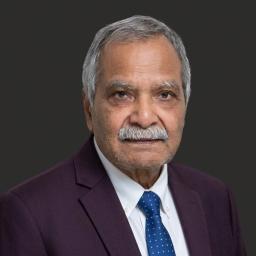
Prof. (Dr.) Ernesto O. Cordero

Prof. (Dr.) Ernesto O. Cordero

Professor

Leadership & Research
A professional leader with over ten years of experience in research, policy development, education, and corporate sustainability. Proven track record of exceptional leadership skills and outstanding results. Served in senior positions in professional and academic settings.

Developed, delivered, and evaluated organisational programs, training, and education. Recognised with prestigious awards and memberships. Proficient in strategic planning, quality management, and corporate project planning. Excellent oral and written communication skills. Strong facilitation skills. Strategic and critical thinking abilities. Successfully led initiatives and managed international conferences. Policy expert and international development specialist. Led grant solicitation projects. Active involvement in corporate and non-profit organisations. Experienced in corporate strategy, learning/education, training, sustainability, corporate management, and healthcare. Holds a Doctorate in Business Administration and a master’s in business administration. Pursuing additional credentials and a Post-Doctorate in Interdisciplinary Research Scholar
Canada
Dr. Eli Hamadimann

Dr. Eli Hamadimann

Professor

Research and Education Management
Dr. Eli Hamadimann is a distinguished figure in the realm of education, blending academic prowess with extensive industry experience to drive innovation and excellence. With a PhD from esteemed American institutions, Oakland University and the University of Alabama at Birmingham, Dr. Hamadimann has cultivated a rich background spanning two decades in teaching and education management

As an educator, Dr. Hamadimann has demonstrated an unwavering commitment to nurturing intellectual growth and fostering collaborative learning environments. His tenure as Program Director at Jumeira University and various other prestigious institutions underscores his dedication to shaping the minds of tomorrow's leaders.

Beyond academia, Dr. Hamadimann has amassed a wealth of experience as an industry expert, leveraging his expertise in areas such as project management, problem-solving, and training & development. His multifaceted background enables him to bridge the gap between theory and practice, imparting invaluable skills to his students and driving positive change in the educational landscape.

Expertise / Achievements / Skills:
  • Over 18 years of experience coaching leaders, family businesses, and organisations in leadership development and change management.
  • Extensive teaching portfolio covering diverse subjects such as E-Management, Strategic Management, Organizational Behavior, and Healthcare Finance.
  • Proven track record in program direction and academic leadership, with roles at esteemed institutions including Jumeira University and The American University in the Emirates.
  • Strong background in project management and electromechanical engineering, with past roles encompassing positions at Pegel Al Rostamani LLC, Deyaar Development, and Energy International Corporation..

Education:
  • Doctor of Philosophy (PhD) in Innovation and Change Management from The Arab Academy For Management, Banking And Financial Sciences.
  • Master of Engineering (MEng) in Project Engineering Management from the University of Alabama at Birmingham.
  • Master of Business Administration (MBA) in Operations Management from Lebanese Canadian University.
  • Bachelor's degree in Electrical Engineering from Oakland University.
United Arab Emirates
Prof. Angela Caswell

Prof. Angela Caswell

Professor

International EducationHealthcareResearch
45 years of experience in healthcare having worked across prestigious organizations in UK, USA KSA. With a specialized interest in research and quality initiatives designed to enhance care delivery, I have 30 publications that have served to contribute to the international healthcare community. Currently Associate Executive Director of Nursing at a University Quaternary Training Hospital in KSA.
Specialized Areas:
Education and Teaching:

  • MSc cohorts with 100% success rate, graduated as a qualified teacher in 2005, I have 20 years’ experience in the field of international education and research that is linked to healthcare.
  • Currently coaching PhD students.
  • Child and adult training at advanced clinical levels.
  • Research and publication
  • Nursing and Midwifery registration
  • Safeguarding and abuse
  • Infection prevention and control
  • Neurosurgery/ICU/psychiatry/psychology
  • Paediatrics
  • Women’s Health
  • Emergency
  • Trauma
  • Disaster management
Hospital Commissioning:
Authored a book on the process of commissioning though the eight stages and beyond, awaiting final acceptance.
  • Speaker at International Nursing Health Conference for Disaster Management Germany 2018
  • Speaker at International Conference for Disaster Medicine Ministry of Health War Office, Riyadh 2019
  • Member of Panel for SSBMT Conference Riyadh 2017, 2018, 2019, 2021, 2023
  • Speaker for Disaster Management Preparation 2022: University of Philippines
  • Speaker at the British Embassy Riyadh- Women in Leadership 2021
  • Speaker at the 10th International Conference on Nursing Research and Evidence-Based Practice, London: 2023
  • Keynote speaker at RCN Conference August 15 th 2023: Building a Framework of CQI in Health Care.
Academic Qualifications:
  • Professorship (Healthcare). PhD Science (Nursing). MSc Advanced Nursing Practice, MA Education.
  • PGCD (teacher training), BSc Hons. , RGN, Pediatric Special Needs Training.
United Kingdom / KSA
Prof. (Dr.) Shardhanand Harinandan Singh

Prof. (Dr.) Shardhanand Harinandan Singh

Professor

Intercultural EducationEthical Historiographyand Archival Digitalization and Justice
Prof. (Dr.) Shardhanand Harinandan Singh is a distinguished scholar, educational policy adviser and an inter-disciplinary researcher who has over five decades of professional experience in inter-cultural education, psychosocial integration and community-based governance. Born in 1944 in Suriname and resident in the Netherlands, he has been instrumental in shaping multicultural policy, effecting transformative education policy and reform in Europe. He is also an Ayurvedic practitioner.

Dr. Singh is the founder of the academic paradigm of Girmitiyalogy (2025), which has given rise to an emerging inter-disciplinary field of study focused on the archival digitalization and genealogical restoration and ethical reinterpretation of Indian indentured labor migration in the context of Vedic Itihāsa (इतिहास). His work is rooted in the principles of human dignity and diversity and restorative justice and international cooperation and is guided by the ethos of Vasudhaiva Kutumbakam and Aatmanirbhar.

Education and Academic Formation:
  • Studies in Social Pedagogy and Andragogical Sciences, Leiden University (1984).
  • Specialization in Social and Preventive Psychiatry, Erasmus University Rotterdam (1982).
  • Ayurvedic Practitioner Training, New Delhi (1994).
  • Doctor of Philosophy (Honoris Causa, 2023).
  • Professorship in Transnational Migration Studies, EIMT Zürich (2025–2030).
Dr. Singh’s academic background includes social pedagogy and andragogical sciences, social and preventive psychiatry, and training in Ayurvedic practitioners, which have helped him in his field of intercultural education and ethical historiography.

Work Experience Highlights:
Professional Educator, Author, and International Consultant – Girmitiyalogy (2009 – Present)

Offer strategic academic leadership in the interdisciplinary space within Girmitiyalogy. Coordinate research partnerships internationally, design models for institutions and governance for global research collaborations, and advance decolonial archival studies and restorative justice research.


Educational Advisor and School Team Supervisor – CED-Groep, Rotterdam (1976-2015)

Advised on the development of multicultural education reform in Rotterdam. Developed and implemented frameworks for psychosocial interventions to facilitate inclusive schooling. Trained school staff and assisted in the development of municipal education policy in a changing urban landscape.


Freelance Lecturer and Curriculum Developer – HBO Rotterdam EO (2001-2005)

Developed and conducted leadership programmes and curriculum design in multicultural education. Also, mentored postgraduate scholars and facilitated academic capacity building programmes.


Head Coach and Lead Curriculum Developer – International Masterclass ‘Digitizing Girmitiya Archives Globally’ (Lucknow, 2025)

Trained over 100 PhD scholars and academic professionals from over 40 countries to strengthen international cooperation in digital humanities, archival preservation, and genealogical reconstruction.


Areas of Expertise:
  • Intercultural Education and Multicultural Policy Development
  • Transformational Psychosocial Intervention Frameworks
  • Decolonial Archival Research and Digital Humanities
  • Curriculum Design (BA/MA/PhD Programmes)
  • International Academic Governance and Institutional Development
  • Restorative Justice and Ethical Historiography
  • Governance Evaluation through the Purushartha Framework
Publications and Scholarly Contributions:

Dr. Singh has authored and edited numerous publications on multiculturalism, migration history, Ayurveda, and integrative knowledge systems, among other subjects. Some of his publications include:

  • Homogenization in Multiculturality (Mumbai, 2024).
  • Verlaten Verleden – De Hindostaanse exodus uit Suriname (Rotterdam, 2021).
  • Verliesgevoelens door multiculturalisme (2025).
  • Inclusive Vedanta in Western Science (forthcoming, 2026).
  • RSI genezen met Ayurveda-therapie (2000).
  • Ayurveda – Gids voor een gezond voedingspatroon in het gezin (1998).

Dr. Singh’s main research themes include:

  • Indentured labor as a crime against humanity,
  • Transnational migration of Indian indentured laborers,
  • Ethical historiography under the Itihāsa paradigm
  • Archival Justice and Genealogical Restoration
  • Governance Evaluation through the Purushartha Framework
Rotterdam, The Netherlands
Dr. Tanios El-Khoury

Dr. Tanios El-Khoury

Professor

Master PlanningUrban DevelopmentInfrastructure & Landscape Design

Dr. Tanios El-Khoury is an accomplished urban development strategist with over 35 years of experience in master planning, infrastructure development, and landscape design across the Middle East, South Asia, Europe, and North America. A C-level executive, he has led billion-dollar megaprojects and complex multidisciplinary programs, combining strategic vision with technical expertise.

He is passionate about sustainable city planning and mentoring future leaders in urban development through real-world case studies and industry challenges.


Work Experience Highlights:

  • Regional Director – Urban Development, Egis Group – Leading large-scale urban planning programs across the Middle East.
  • Director, GCLA – GRM International (KSA Branch) – Managed operations, business development, and project execution.
  • Program Director, NEOM Executive PMO – Oversaw integrated planning for a major smart city megaproject.
  • Program Manager & Senior Master Planner, Jacobs Engineering – Led major urban redevelopment and infrastructure projects.
  • General Manager, GCLA – GRM International (Dubai) – Directed international urban and landscape projects.
  • Senior Consultant, FORMS International (Qatar) – Contributed to large-scale infrastructure planning and coordination.
  • General Manager, WaterTech United (Qatar) – Oversaw operations and project execution.
  • Urban Planning & Landscaping Dept. Manager, Unifert International – Led regional planning functions.
  • Head Landscaping Engineer, Exotica s.a.l. – Managed design and implementation.
  • Landscaping Engineer, CH2M (Seattle) – Worked on infrastructure and landscape design projects.

Core Expertise:

  • Urban and regional master planning
  • Infrastructure and land-use planning
  • Project and program management (PMO leadership)
  • Landscape architecture and environmental planning
  • Smart city frameworks and governance models
  • Stakeholder coordination

Education:

  • Doctorate in Business Administration (PhD, DBA) – European Institute of Management & Technology (EIMT)
  • Bachelor of Science in Horticulture/Agriculture (Minor: Landscape Architecture) – Washington State University, USA

Certifications & Training:

  • Strategic Planning & Project Management – IBM Institute, Berlin
  • Smart Cities & Infrastructure Systems – EPFL, Lausanne
  • Additional training in PMP, Health & Safety, and Professional Ethics (CH2M, Jacobs Engineering, Egis Group)

Technical Proficiencies:

  • AutoCAD, Photoshop CS6, SketchUp
  • Microsoft Office (Word, Excel, PowerPoint)
  • Aconex, Asite, GIS
  • Internet Applications
Saudi Arabia
Prof. Dr. Jennifer Safran

Prof. Dr. Jennifer Safran

Professor

Vocational & Adult EducationBusiness EducationDigital Learning Innovation & Competency-Based Learning

Prof. Dr. Jennifer Safran is an accomplished scholar, lecturer, author, and educational innovator with over 15 years of experience in vocational and higher education. She is recognised for her expertise in competency-based learning, assessment design, business education, and the integration of digital technologies into modern learning environments.

Her work bridges academic excellence with practical application, focusing on evidence-based didactics, digital transformation in education, and the development of innovative AI-supported learning solutions. Through her teaching, research, publications, and educational technology initiatives, she continues to contribute to the advancement of vocational and adult education in the digital age.


Work Experience Highlights:

  • Freelance Lecturer, Author & Education Specialist (2011–Present) – Delivering teaching and professional training in business administration, leadership, controlling, human resource management, and vocational education.
  • Educational Content Developer – Designing study materials, case studies, examination tasks, and competency-based learning frameworks for vocational and higher education.
  • Digital Learning Innovator – Developing AI-supported learning applications and digital learning environments to promote sustainable competence development.
  • Vocational Education Consultant – Preparing professionals for advanced vocational qualifications, IHK examinations, and AEVO trainer certification programmes.
  • Examiner, IHK Examination Boards – Serving for more than 15 years in examination and assessment roles, supporting quality assurance in vocational qualifications.

Core Expertise:

  • Vocational and Adult Education
  • Competency-Based Learning and Assessment Design
  • Business Education and Management Studies
  • Human Resource Management and Leadership Development
  • Digital Learning and Educational Technologies
  • AI-Supported Learning Processes
  • Examination Design and Qualification Systems
  • Educational Content Development and Curriculum Design
  • Evidence-Based Didactics and Learning Innovation

Education:

  • Doctorate in Vocational Education and Training (PhD equivalent), Cum Laude - Karlsruhe Institute of Technology (KIT), Germany
  • Master of Arts (MA), Adult Education - University of Kaiserslautern, Germany
  • Master of Business Administration (MBA) - IU International University, Germany
  • Bachelor of Arts (BA), Business Administration - South Westphalia University of Applied Sciences, Germany

Publications & Educational Media:

  • Author – Die schriftliche IHK-Prüfung
  • Author – Die praktische AEVO-Prüfung
  • Developer of academic course content, vocational training resources, study guides, examination materials, and digital learning applications.

Certifications & Professional Engagement:

  • Certified Real Estate Specialist (IHK)
  • Certified Trainer (IHK)
  • Certified Live Online Trainer
  • Over 15 Years of Service as an IHK Examination Board Examiner
  • Extensive Experience with Virtual Learning Environments and Digital Education Platforms

Technical Proficiencies:

  • Learning Management Systems (LMS)
  • Digital Learning Platforms & Virtual Classrooms
  • AI-Supported Learning Applications
  • Microsoft Office Suite (Word, Excel, PowerPoint)
  • Educational Content Development Tools
  • Online Assessment & Examination Systems

Academic Profile:

Prof. Dr. Jennifer Safran's work is distinguished by the integration of academic rigour, practical relevance, and educational innovation. By combining established pedagogical frameworks with emerging digital technologies and AI-enabled learning solutions, she is helping shape the future of vocational and adult education while promoting effective, sustainable, and learner-centred educational experiences.

Mömbris, Germany
accreditationImg
USDLA
accreditationImg
EURASHE
accreditationImg
ACBSP
accreditationImg
QAHE
accreditationImg
AQS
accreditationImg
ATHEA
accreditationImg
EAE

Program Outcomes:

  • Classify and Evaluate AI Product Opportunities: Apply archetype classification and wrapper-risk scoring to spot genuinely defensible AI products. Graduates can screen an idea critically before any code is written.
  • Apply Predictive ML Judgement to Business Decisions: Set decision thresholds tied to business cost and read confusion matrices and drift signals. Graduates own predictive product decisions, not just generative ones.
  • Run Structured AI Opportunity Discovery: Score use cases on feasibility, value and data-readiness before committing engineering time. Graduates can defend which ideas deserve a roadmap slot.
  • Treat Prompts and Context as Product Specifications: Design versioned prompt libraries and specify system behaviour like a PRD specifies a feature. Graduates own the AI behaviour spec directly.
  • Build and Deploy a Working AI Prototype: Assemble and publicly deploy a retrieval-grounded or agentic AI product using no-code tools. Graduates validate ideas with a real demo, not a mockup.
  • Design and Run an Evaluation Suite: Curate golden datasets and configure LLM-as-judge rubrics to gate releases on evidence. Graduates prove an AI feature works with data, not opinion.
  • Govern AI Products Responsibly: Apply risk classification, red-teaming, and frameworks like the EU AI Act and NIST AI RMF. Graduates deploy AI features that hold up under legal and security scrutiny.
  • Take an AI Product from Pilot to Production Case: Model unit economics, write a complete AI PRD, and diagnose why pilots stall. Graduates are ready for roles like AI Product Manager or GenAI Product Lead.

image1

Important Information Regarding Advanced Certification in AI Product Management

Program Delivery

This program is delivered live online, with every module providing you with the practical knowledge in AI Product Management. You move from AI and ML fundamentals through discovery, prototyping, retrieval and agents, then into evaluation, governance, metrics and economics, before closing with a two-part capstone project.

Your capstone concept develops across the entire program, so what you submit at the end is a complete, defended product story.

practitioner

Industry Leaders and Faculty Members

Every faculty member at EIMT has actually worked on building AI-powered products, not just studied them. Many have led AI features from first opportunity screening through evaluation, governance and production rollout, so the feedback you receive on your labs reflects what hiring panels for AI product roles are actually looking for today.

We collaborate with several renowned, top scholars around the world. We believe that knowledge comes from a mix of talented and highly skilled professors who gained important experience in an industry context.

professor

Admission Requirements:

A working familiarity with product development workflows is expected to join this program, but no coding or technical background is required. A short self-paced primer is included at the start so that learners from different backgrounds begin from the same page.

Language Proficiency:
All modules are delivered in English, so non-native speakers need to demonstrate their language proficiency before starting classes. EIMT accepts an official IELTS score or an equivalent recognised certificate.

Language Waiver:
The English test requirement is waived if you meet any of the following:
  • You're a native English speaker
  • You completed secondary or higher education entirely in English
  • You have at least two years' professional experience working in an English-speaking environment
Digital Competence:
You'll need to be comfortable using computers, browsing the internet, and working independently with everyday software tools before the course begins, as this will help you stay on track with the online learning environment from day one.

Application Process

Applications are accepted online. After receiving your application, the admissions team reviews your academic qualifications and supporting documents to determine your eligibility for the program. Eligible applicants receive further instructions regarding admission and Enrolment.

After Admission

Once your admission is confirmed, you will receive your enrolment details and access to the online learning platform. From there, you can attend live weekend classes, access learning resources, complete assessments, and interact with faculty and fellow participants throughout the duration of this program.

Program Completion Requirements

Successfully complete all required modules and assessments.

Complete the capstone projects.

Meet the academic requirements for the award of the certification.

The Curriculum

The Advanced Certification in AI Product Management covers 20 modules, progressing from AI-native product thinking and predictive ML fundamentals to discovery, data, prompting, prototyping, RAG, agents, evaluation, UX, governance and product economics. It concludes with a two-part capstone covering prototype development, evaluation, hardening and production readiness.

The AI Product Management Program

20 Modules | 60 Hours

Build the skills to identify, prototype, evaluate, govern, and take AI products from opportunity through production readiness. The program covers AI product strategy, predictive ML, prompt and context engineering, RAG, AI agents, evaluation, responsible AI, product metrics, economics, roadmapping, and hands-on capstone development.

Topics

  • AI-enabled vs AI-native vs agentic products - a working taxonomy
  • What breaks in classic PM: specs, QA, estimation, roadmaps, definition of done
  • The current AI market map: models, infrastructure, application layer, agent ecosystem
  • Where value accrues; wrapper risk and real sources of defensibility
  • Build vs buy vs orchestrate decision framework
  • Case studies: coding copilots, support deflection, vertical AI (legal, health, finance)
  • The AI PM competency model and how the role is actually being hired for

Hands-on / Demo

  • Teardown of 3 shipping AI products - archetype, moat and wrapper-risk score
  • Build a 1-page AI Product Teardown Canvas for each
  • Structured debate: defend one product as defensible, attack another as a thin wrapper

Skills

AI product archetype classificationCompetitive teardown and moat analysisBuild vs buy vs orchestrate decision-makingAI market and landscape literacy

Topics

  • Tokens, embeddings and context windows - what a PM must internalise
  • Transformers at intuition level; pretraining vs post-training vs alignment
  • LLMs vs classical ML vs deep learning - when each is the right tool
  • Reasoning models and test-time compute; when 'thinking' is worth the cost
  • Open-weight vs proprietary models; licensing, sovereignty and portability
  • Temperature and sampling - why the same prompt returns different answers
  • Why hallucination is structural, not a bug waiting to be patched
  • The capability-reliability gap and its product implications

Hands-on / Demo

  • Run Llama, Qwen, Mistral and Gemma locally via Ollama / LM Studio
  • Benchmark 3 models on one identical product task; log quality, latency and cost
  • Navigate Hugging Face model cards, licences and leaderboards critically
  • Optional Python (async): call an open model from Colab and sweep temperature settings

Skills

Foundation model literacy and capability assessmentModel benchmarking across cost, latency and qualityOpen vs proprietary model evaluationTechnical communication with engineering teams

Topics

  • Supervised, unsupervised and reinforcement learning - what each is good for
  • Predictive product families: classification, regression, ranking, recommendation, forecasting, anomaly detection
  • The confusion matrix translated into business terms
  • False positives vs false negatives - who pays for each, and how much
  • Precision, recall, F1 - and when each is the wrong thing to optimise
  • Setting the decision threshold as a product decision, not a modelling one
  • ROC/AUC and precision-recall curves read as trade-off instruments
  • Class imbalance and base rates - why 99% accuracy can be worthless
  • Ranking and recommender metrics: relevance, diversity, coverage, cold start
  • Model drift, retraining triggers and production monitoring
  • When a simple model or plain heuristic beats an LLM on cost, latency and control

Hands-on / Demo

  • Business-cost workshop: price false positives and false negatives for a fraud or churn use case, then derive the optimal threshold
  • Read a real confusion matrix and precision-recall curve; recommend and defend a threshold to a stakeholder
  • Train and tune a no-code classifier in Orange Data Mining or Hugging Face AutoTrain and interpret the evaluation output
  • Optional Python (async): scikit-learn notebook plotting business cost against threshold

Skills

Predictive model evaluation and metric selectionDecision-threshold setting tied to business costDrift monitoring and retraining strategyTechnical fluency with data science teams

Topics

  • Jobs-to-be-Done applied to AI-shaped problems
  • The AI-fit test: error tolerance, volume, judgement density, verifiability
  • Automation vs augmentation vs generation - choosing the intervention level
  • Feasibility x value x data-readiness screening
  • Sizing ROI: cost displaced, revenue enabled, experience improved
  • Opportunity solution trees adapted for probabilistic products
  • Anti-patterns: the chatbot reflex, AI-washing, solution-first roadmaps

Hands-on / Demo

  • Run the AI Opportunity Scorecard on a real workflow from the learner's own org
  • Plot 8 candidate use cases on a feasibility / value matrix

Skills

AI opportunity identification and screeningFeasibility and value assessmentROI sizing for AI initiativesAnti-pattern detection and AI-fit judgement

Topics

  • Data strategy for AI PMs; proprietary data as durable advantage
  • Data readiness audit: volume, quality, coverage, labelling, freshness
  • Labelling strategy, annotation cost and quality control
  • Synthetic data - where it helps and where it quietly misleads
  • The cold-start problem and bootstrapping approaches
  • Feedback loops and designing the data flywheel
  • Consent, provenance, licensing and training-data rights
  • Data contracts and working agreements with engineering

Hands-on / Demo

  • Audit a public dataset (Kaggle / HF Datasets) against a readiness checklist
  • Generate synthetic edge-case data with an open model
  • Design and present a data flywheel diagram for the Module 4 use case

Skills

Data readiness assessmentData flywheel and feedback loop designLabelling and synthetic data strategyData governance and provenance literacy

Topics

  • Prompt anatomy: role, task, constraints, examples, output contract
  • Zero-shot, few-shot, chain-of-thought, decomposition, self-critique
  • System prompts as behavioural specification - and who owns them
  • Structured output, JSON schema and machine-readable contracts
  • Context engineering vs prompt engineering; context rot and window budgeting
  • Prompt versioning, libraries, testing and ownership across the org
  • Designing against prompt injection from the spec stage
  • When prompting stops being enough - signals to escalate to RAG or tuning

Hands-on / Demo

  • Build a versioned prompt library for a support-triage feature
  • Force schema-valid JSON output and handle malformed responses gracefully
  • A/B two prompt versions across 20 test inputs and document the winner
  • Optional Python (async): batch-run prompts via API in Colab and score outputs

Skills

Advanced prompt and context engineeringStructured output and schema designPrompt versioning and systematic testingBehavioural specification writing

Topics

  • The AI-augmented PM operating system: what to delegate and what never to
  • Customer research at scale: transcription, thematic synthesis, quote and sentiment mining
  • Synthetic users and AI-simulated interviews - the real limits and failure modes
  • Competitive and market analysis with AI research tools; verification discipline
  • Mining support tickets, reviews and surveys for opportunity discovery
  • Drafting PRDs, user stories and acceptance criteria with AI as first-pass writer
  • Spec-to-prototype with coding agents; reviewing code you did not write
  • Meeting synthesis, stakeholder updates and executive summaries
  • Hallucination hygiene: verification workflows and what never ships unchecked
  • Confidentiality: what customer and company data must never enter a prompt

Hands-on / Demo

  • Synthesise 10 real user interview transcripts into a themed insight report, then hand-check every theme against source
  • Run an AI-assisted competitive teardown, fact-verify each claim and log the error rate
  • Generate a PRD first draft from a rough brief, then critique and correct it against a rubric
  • Build a personal AI PM workflow playbook of 8-10 reusable, versioned prompts

Skills

AI-assisted user research synthesisVerification and hallucination-hygiene disciplineRapid spec and documentation draftingPersonal AI workflow design

Topics

  • The prototype-first PM; what evidence actually gets a feature funded
  • Vibe coding - what it unlocks and where it collapses
  • Interface patterns: conversational, canvas, inline, ambient
  • Scoping a demo vs an MVP vs a production feature
  • Deployment, sharing and collecting first-user feedback fast
  • Prototype hygiene: API keys, cost caps, data handling

Hands-on / Demo

  • Build and publicly deploy an AI app with Gradio or Streamlit on Hugging Face Spaces
  • Run a 3-user feedback round on the deployed prototype and log findings
  • Optional Python (async): Chainlit chat app with streaming responses

Skills

Independent AI prototype buildingDeployment and public sharingRapid validation and feedback collectionDemo-to-MVP scoping judgement

Topics

  • Why hallucination happens and what grounding actually fixes
  • RAG architecture end to end: ingest, chunk, embed, retrieve, generate
  • Chunking and metadata strategy; why document structure matters
  • Embeddings and vector stores - the PM-relevant trade-offs
  • Citations, provenance and source display as UX primitives
  • Knowledge freshness, re-indexing and content ownership
  • Long context vs RAG vs both - the cost and quality trade-off
  • RAG failure modes: retrieval miss, distractor context, stale source

Hands-on / Demo

  • Build a document-grounded assistant with Dify or Flowise plus ChromaDB
  • Break it deliberately with 5 adversarial queries and write a failure analysis
  • Compare 2 chunking strategies on the same corpus and measure the difference
  • Optional Python (async): LangChain / LlamaIndex RAG notebook

Skills

RAG architecture designChunking and retrieval strategyGrounding and citation UX specificationRetrieval failure diagnosis

Topics

  • Hybrid search: keyword plus semantic, and why pure vectors under-deliver
  • Re-ranking and the retrieve-then-rerank pattern
  • Query rewriting, expansion and multi-query retrieval
  • Graph RAG and structured knowledge for highly connected domains
  • Agentic RAG: self-correcting, iterative and multi-hop retrieval
  • Permission-aware and multi-tenant retrieval in enterprise deployments
  • Retrieval evaluation: context precision, context recall, faithfulness, answer relevance
  • The customization decision tree: prompt vs RAG vs fine-tune vs build
  • LoRA / QLoRA and distillation - when fine-tuning genuinely wins
  • Model routing, cascading and small models for cost control
  • Cost, latency and index-maintenance economics at scale

Hands-on / Demo

  • Upgrade the Module 9 assistant with hybrid search and a re-ranker; measure the lift
  • Build an agentic RAG flow that retries retrieval when confidence is low
  • Run a retrieval eval with Ragas and produce a before/after quality report
  • Complete a Model Selection Matrix for the learner's use case with defended scoring
  • Optional Python (async): LoRA fine-tune a small model with Unsloth and compare against the prompted baseline

Skills

Production retrieval system specificationHybrid search and re-ranking designPrompt vs RAG vs fine-tune decision-makingRetrieval quality measurement

Topics

  • Agents vs deterministic workflows - the decision rule
  • Tool use and function calling; designing the tool surface
  • Model Context Protocol (MCP) and the interoperable tool ecosystem
  • Multimodal tool use: vision, document and speech inputs inside agent workflows
  • Planning, memory and state; single-agent vs multi-agent patterns
  • Autonomy levels and human-in-the-loop checkpoints
  • Agent failure modes: loops, drift, runaway cost, silent wrong actions
  • Reliability, sandboxing and permissioning for agents that take actions
  • Agentic product patterns: copilot to assistant to autonomous co-worker

Hands-on / Demo

  • Build a multi-step agent in n8n or Langflow that calls two tools and escalates on low confidence
  • Add a document or speech input step using an open vision or Whisper model
  • Connect an MCP tool and trace the full execution end to end
  • Write the Autonomy and Escalation Specification, then stress-test for loops and cost blowout

Skills

Agent vs workflow decision-makingTool surface and MCP integration designAutonomy and escalation specificationAgent reliability and cost control

Topics

  • Eval-driven development as the core AI PM discipline
  • Why public benchmarks mislead product decisions
  • Curating golden datasets: coverage, edge cases and adversarial cases
  • Rubric design and scoring criteria non-technical raters can apply
  • LLM-as-judge: setup, calibration and its known biases
  • Human evaluation and annotation workflows
  • Offline vs online evaluation; regression testing and prompt CI
  • Task success, groundedness, faithfulness and safety metrics
  • Closing the loop: eval, diagnosis, improvement, re-eval

Hands-on / Demo

  • Curate a 30-case golden dataset for the learner's prototype
  • Run automated evals in Promptfoo and Ragas / DeepEval
  • Configure an LLM-as-judge rubric and calibrate it against human ratings
  • Produce an eval report with an explicit pass/fail release gate

Skills

Golden dataset curationEval suite design and executionLLM-as-judge configuration and calibrationRelease gating on quality evidence

Topics

  • Designing under uncertainty; setting honest expectations at first contact
  • Trust calibration, over-reliance and automation complacency
  • Confidence, provenance and citation UX
  • Progressive disclosure, steerability and user control
  • Error recovery, undo and the edit affordance
  • Latency UX: streaming, skeletons, optimistic states, background jobs
  • Voice and multimodal interaction patterns and their latency budgets
  • Feedback capture that genuinely feeds the data flywheel
  • Onboarding and mental-model building for non-deterministic features
  • AI UX anti-patterns and dark patterns to avoid

Hands-on / Demo

  • Critique a live AI feature against a trust-UX heuristic checklist
  • Redesign its failure states and produce a Failure-State UX Spec covering wrong, uncertain, refused and slow
  • Wireframe the redesign in Penpot and run a peer review

Skills

Probabilistic interface designTrust calibration and failure-state designLatency and streaming UX specificationFeedback loop instrumentation

Topics

  • Bias, fairness and representational harm; how to evaluate for them
  • Explainability, transparency and disclosure obligations
  • EU AI Act risk tiers; NIST AI RMF; ISO/IEC 42001; India DPDP Act implications
  • Model cards, system cards and internal AI review boards
  • OWASP LLM Top 10 translated for product teams
  • Direct and indirect prompt injection; jailbreaks; system-prompt extraction
  • Data exfiltration through tools and agents; PII handling, redaction, retention
  • Guardrails, content filtering and safe-completion design
  • Vendor due diligence, DPAs and model supply-chain provenance
  • Red-teaming and AI incident response as recurring product rituals

Hands-on / Demo

  • Red-team the learner's own prototype with Garak plus manual injection attempts
  • Configure guardrails with Guardrails AI or Llama Guard and evidence the block
  • Produce a combined governance and security pack: risk classification, model card, risk register
  • Write a prioritised mitigation plan with named owners and target dates

Skills

AI risk classification and governance documentationRed-teaming and adversarial testingRegulatory compliance mapping (EU AI Act, NIST, DPDP)Guardrail and mitigation design

Topics

  • The AI metric stack: task success, containment, deflection, acceptance and edit rate, time-to-value, escalation rate
  • Choosing a north star metric for an AI product
  • Leading vs lagging quality signals
  • Tracing and observability: spans, sessions, token and cost attribution
  • A/B testing with stochastic outputs; variance and sample-size traps
  • Shadow mode, canary releases and staged rollout
  • Guardrail metrics and automatic rollback triggers
  • Establishing the weekly AI quality review ritual

Hands-on / Demo

  • Instrument the prototype with Langfuse tracing and PostHog product analytics
  • Build a metrics dashboard covering quality, cost and adoption
  • Write an experiment design doc for one improvement hypothesis, with power and stop criteria

Skills

AI metric stack definitionObservability and tracing instrumentationExperiment design under non-determinismQuality dashboard construction

Topics

  • Token economics and AI cost of goods sold
  • Gross-margin compression in AI products versus classic SaaS
  • Cost drivers: context length, retries, agent loops, reasoning tokens, re-indexing
  • Optimisation levers: caching, routing, batching, quantisation, smaller models
  • Pricing models: seat, usage, credits, hybrid, outcome-based
  • Metering, quotas, fair-use policy and free-tier abuse
  • When not to charge for AI; bundling and competitive pricing pressure
  • Capacity planning, rate limits and vendor negotiation

Hands-on / Demo

  • Build a cost-and-margin model in LibreOffice Calc / Google Sheets for 10K, 100K and 1M monthly requests
  • Run a pricing simulation across three models and identify break-even
  • Present the recommended pricing model with margin sensitivity analysis

Skills

AI unit-economics modellingInference cost optimisationAI pricing strategy designMargin and break-even analysis

Topics

  • Anatomy of an AI PRD: behaviour spec, eval plan, failure taxonomy, guardrails, rollout
  • Writing acceptance criteria for probabilistic outputs
  • Spec-driven development and specs as living artifacts
  • Roadmapping under model uncertainty; option-based planning
  • Org design for AI-native teams; where AI expertise should sit
  • Working with data scientists and ML engineers: shared vocabulary and rituals
  • Model lifecycle in the roadmap: drift, retraining, deprecation, migration
  • Executive communication: translating model risk into business risk
  • Managing hype and the 'just add AI' mandate
  • Launch readiness review and go / no-go criteria

Hands-on / Demo

  • Write a complete AI PRD for the capstone concept, including eval plan and rollout gates
  • Run a peer Launch Readiness Review against a scored rubric
  • Build a 2-quarter AI roadmap with explicit uncertainty flags
  • Deliver a 5-minute executive risk briefing translating one model failure mode into business impact

Skills

AI PRD authoringRoadmapping under model uncertaintyCross-functional leadership of AI teamsExecutive communication of model risk

Topics

  • The pilot-to-production failure data and what it actually indicates
  • The four readiness gates: data, integration, economics, governance
  • Why the demo works and the deployment does not - integration and systems-of-record debt
  • Cost surprise at scale: pilot economics versus production economics
  • Defining a production success metric before the pilot starts
  • Buy vs build revisited - why internal builds stall at higher rates
  • Procurement, security questionnaires, DPAs and the enterprise buying committee
  • Pilot fatigue and the organisational cost of repeated stalls
  • Change management and adoption when AI changes how people work
  • Sunsetting honestly: how and when to kill an AI initiative

Hands-on / Demo

  • Run a pilot post-mortem on a real stalled AI initiative and classify root cause against the four gates
  • Build a Production Readiness Gate checklist and apply it to the capstone concept
  • Draft a pilot charter: success metric, exit criteria, integration plan, production cost estimate
  • Mock enterprise review - defend the initiative to a sceptical CFO and security lead played by peers

Skills

AI pilot design with production exit criteriaOrganisational readiness diagnosisEnterprise stakeholder and procurement navigationChange management for AI adoption

Topics

  • Capstone brief, artifact set and assessment criteria walkthrough
  • Problem framing and archetype selection for the chosen concept
  • AI-fit and error-tolerance check before any build begins
  • Model / RAG / agent architecture decision with written justification
  • Data plan: sources, readiness, licensing and provenance
  • Evaluation strategy outlined before the build, not after
  • Prototype scoping: where the demo boundary sits versus production
  • Backend assembly in Dify, Flowise, Langflow or n8n
  • Front end in Gradio or Streamlit
  • Deployment to Hugging Face Spaces and public access checks
  • Prototype hygiene: API keys, cost caps and data handling

Hands-on / Demo

  • Complete the one-page product brief plus architecture diagram and take it through instructor design review
  • Assemble the prototype backend and wire in retrieval or tools as the architecture requires
  • Deploy to a public URL and verify the prototype runs unaided for a stranger
  • Log first-build blockers and clear them in the instructor-supported working session

Skills

End-to-end AI product scopingArchitecture decision and written justificationIndependent prototype assembly and deployment

Topics

  • Golden dataset curation for the capstone concept
  • Running the eval suite and reading the results honestly
  • Diagnosing and fixing the single largest failure mode
  • Guardrail configuration and safe-completion behavior
  • Red-team pass and mitigation logging
  • Risk classification and the model card
  • Tracing instrumentation and the metric set
  • Unit-economics and margin model across three volume tiers
  • Pricing recommendation tested against the cost curve
  • Production readiness gate assessment
  • AI PRD completion and artifact pack assembly for submission

Hands-on / Demo

  • Curate a golden dataset, run a Promptfoo / Ragas eval and document the pass/fail release gate
  • Apply guardrails, complete a red-team pass and log every finding with a mitigation and named owner
  • Instrument tracing and build the cost-and-margin model at 10K, 100K and 1M monthly requests
  • Assemble and submit the final artifact pack: AI PRD, eval report, risk register, unit-economics model and readiness-gate assessment

Skills

Eval execution and release gatingGuardrail and red-team hardeningAI unit-economics modellingPortfolio-grade documentation and handover
FAQ's

Frequently Asked Questions

Register Now! Online Classes for the New Academic Session Begin on 1 November 2026

REGISTER NOW